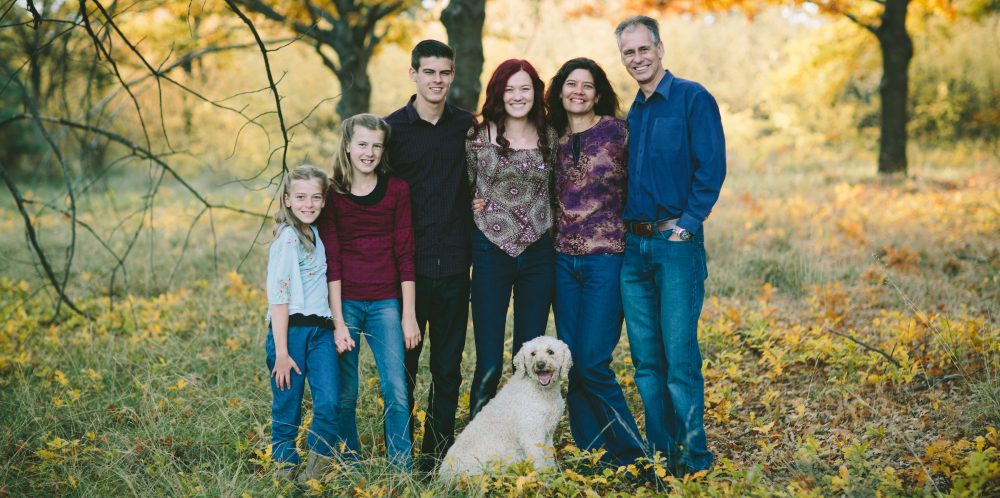
– go to a Christian Outreach Centre Church Sunday morning. We were greeted by several people and made to feel welcome and Hannah and Beth enjoyed going to the children’s church and doing some craft and playing with play-dough.
– have lunch at McDonalds
– drive up to the lookout and get a great view over the city.
– go to Lake Moondarra 15 mins out of Mt Isa, where fishermen catch good barramundi and there is a nice recreation area. We enjoyed watching the birds flying down to try to pick up fish with their claws.
– Michael, Lauren, Sam and Hannah did an underground mine tour at The Hard Times Mine, which is a simulated underground mine. As well as doing tours here, they use it for training apprentices. They had an age limit of 7yrs old for children so Bethany was not allowed to go on the tour (they are down there for 2and a half hours and so I guess they think the younger children might not handle this very well). Bethany and I went grocery shopping while the others were on the tour, then met the others with lunch. They had all found it very interesting. One interesting thing they learned was that Mt Isa is actually the biggest city in the world in surface area, due to a governmental anomaly. What used to be the shire of Mt Isa (extending to Cloncurry in the east and Camooweal in the west, and further north and south) was converted to the city of Mt Isa, but the land area remained the same ( not sure this makes sense – but that’s what the guide said).
– all of us did a tour of the Underground Hospital. This was a mostly unknown part of Mt Isa’s history until fairly recently (I think about 20 yrs ago) when the blade of an end loader which was doing some erosion control work uncovered the entrance to this hospital. It was dug into the side of a hill beside the existing hospital in 1942, after Darwin was bombed by the Japanese. It was believed that the threat of Mt Isa being bombed was a very real one (due to the lead being produced there), so the MIM company made the material available and a group of dedicated miners did the work voluntarily after they finished their shifts. It took 12 weeks to dig, drill and blast out. As history tells, the underground hospital never needed to be used for its intended purpose (thankfully), and in the early 1950s the entrances were covered with earth. It was forgotten and not known about for years. When unearthed, it still had the beds and equipment in there – they have been left there. It was a very interesting glimpse into history.
– Dad and the kids went to a family fun park, including a waterpark, for an hour or so.
– all of us did a surface mine tour into the Mt Isa Mines site. This was a 2 hr tour on a bus, with the guide driving us around the different parts of the site and explaining things. Of all the tour guides we’ve had so far on our tours, he was my least favourite. He was fairly robotic in his presentation of information and he didn’t encourage questions very well, as he would often say “I will get to that later”. I initially asked a few questions, but after his response, I thought it might be better to look it up later myself:). Despite this, I did learn a lot and found it very interesting. It is the only mine in the world which mines for all 4 metals – silver, lead, zinc and copper. The first 3 are mined together in same ore and the initial stages of processing are done together, until they are separated. The copper is mined in a different ore. There is the underground area which goes down nearly 3km. Only about 2 percent of the employees work underground. There is also the big open cut mine (the black star mine) which digs out much of the ore and there is the vehicle maintenance and machinery maintenance, and there is all the different areas for the processing steps. The main steps in the processing which I remember are: collecting the ore, crushing the ore (into the size of talcum powder), extracting the metal from the ore by bubbling it through a reactant (this is where an understanding of chemistry is needed) , then putting it through a concentrator, then smelting it to remove impurities. During the extracting process I think is when most of the fumes are released. These need to be cleansed as much as possible (more chemical processes) and then let out the stacks. There are 3 tall stacks at MIM, the tallest one being the lead stack which is 273m high. When it was built in 1975, it was the tallest freestanding structure in the southern hemisphere. It is the structure that dominates the skyline of Mt Isa from many kms away. At the open cut mine, we saw the huge dump trucks driving down to the bottom and then up to the top. Apparently it takes 30 mins for a truck to go one way (up or down). Regarding the trucks, most of them are driven by women and the company actually prefers this because the lifespan of the trucks are longer with women drivers. This is because if a red indicator light comes on in the cab whilst driving, the women get it looked at straight away, whereas the blokes tend to think ‘she’ll be right mate’ and not mention it until knock off time. One more thing I found really interesting was that there is a specific roadway for the road trains that come from the Gordon Fisher Mine 20kms north of the main mine. This is another open cut mine and the road trains carry 500 tonnes of ore each time from the GF mine to the main mine site for processing. Because of how heavy they are, they are not allowed to drive on the main roads, so they have their own roads (I guess built by MIM) to travel the 20km.
– we visited the 2 museums at the Isa Experience Centre. One of these gave an overview of the history of Mt Isa – I found this fascinating. I had no idea about how Mt Isa had come about up until then. It is quite a young town in comparison to most others around it – 1923. Founded by John Campbell Miles, a prospector passing through the area on his way to NT – and came across rock which looked interesting to his geology-trained eyes. He sent some to Cloncurry for analysis and it was found to have an amazingly high content of lead and zinc. It was a year later that MIM was established – the town that followed grew from this company. The 2nd museum was the Riversleigh Fossil Museum, which explained about the Riversleigh area north of Mt Isa where many significant fossils have been found. I found this less interesting, but the kids found some interest in it.
As I had said, the caravan park we stayed at in Mt Isa was quite laid back, and quite cheap for our family. The down side was that the facilities were quite basic and there was red dirt everywhere rather than grass – needed more care to keep everything clean. There was a pool there, but it was quite cold. Hannah and Beth had a swim twice, but only lasted about 5-10 mins each time. The other thing about it was it seemed to be made up of quite a bit of permanent accommodation – more so than the temporary accomodation. We think it was probably a lot of people who came to work at the mines for a limited time, and only wanted cheap lodgings.
All in all, I found our time at Mt Isa had both good and bad aspects. Good for all the interesting things I learnt there. Bad for the dust and dirt and lack of shade. It must have been a harsh environment for the pioneers in summer especially!